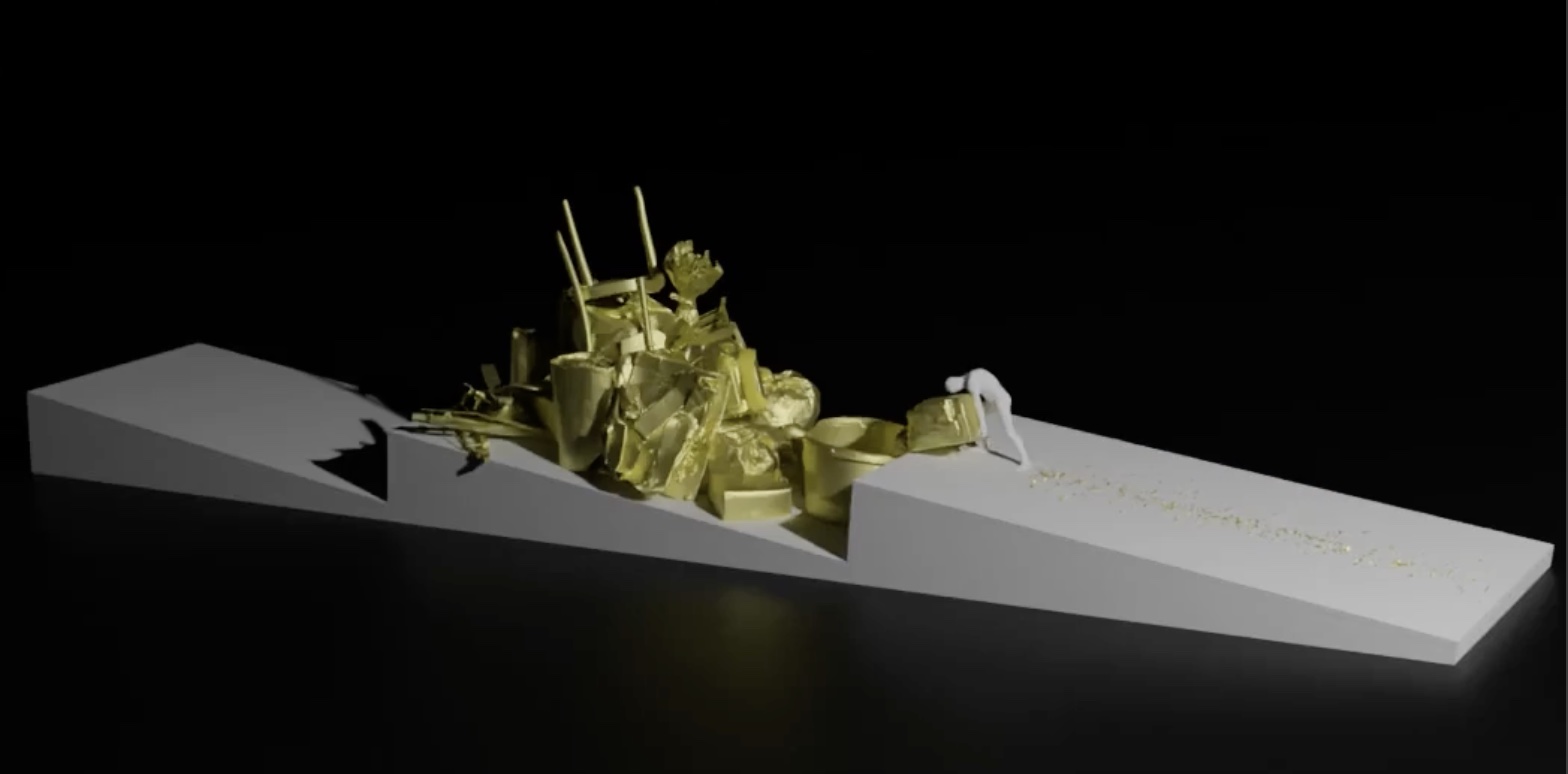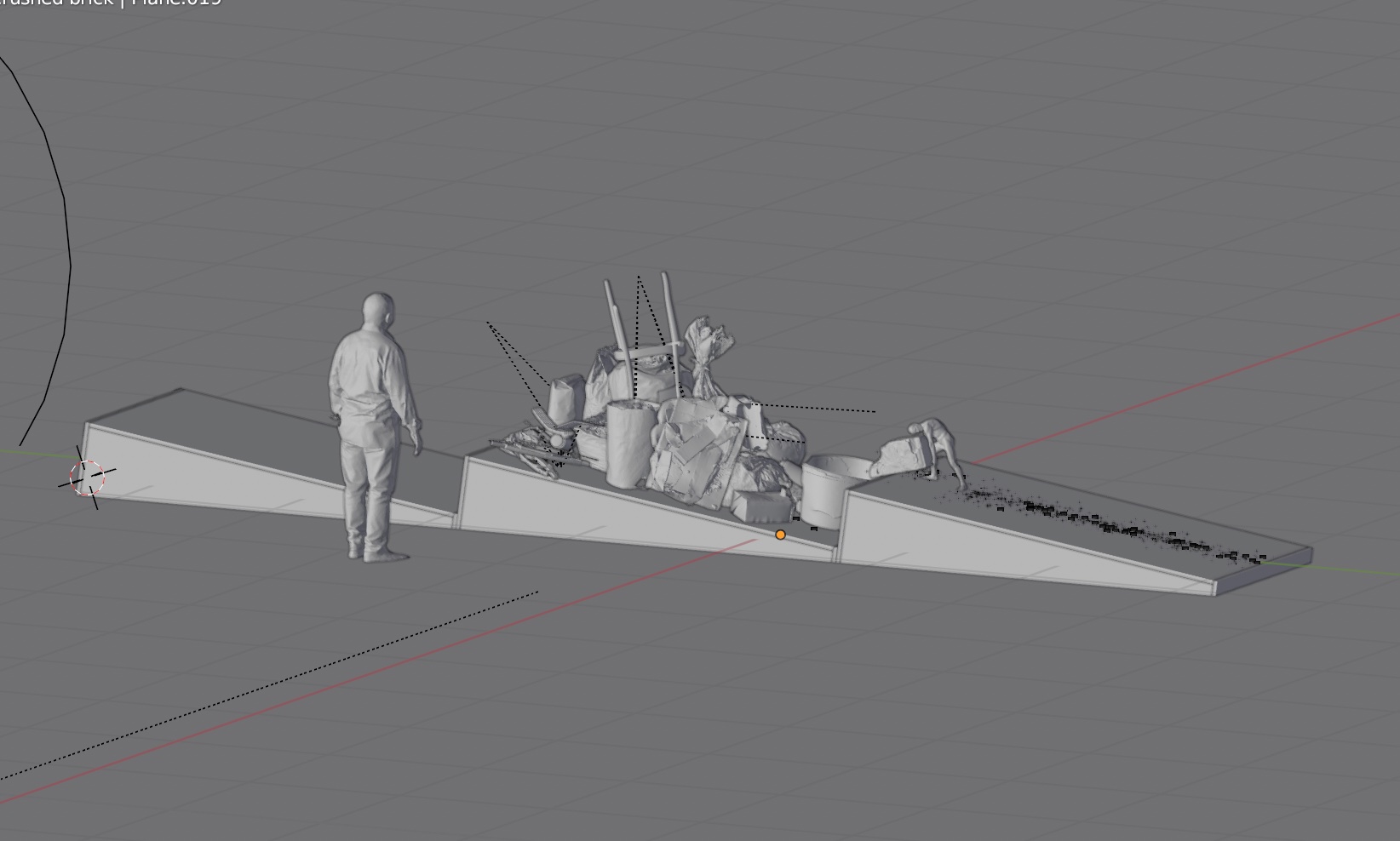
site-specific performance
This project serves
as an allegory of the Sisyphean struggle to generate effective waste
recycling solutions, though its primary intent was to explore the potential
artistic condition of common objects within an institutional framework.
Specifically, it questioned the reclassification of residual objects as
artworks, as outlined in the project’s official statement. However, this
was not driven by a salvific intent. The work did not aim to provoke
dialogue or change recycling methods but rather to produce a speculative
conceptual space in which waste could be reconsidered through the legitimising structures of art.
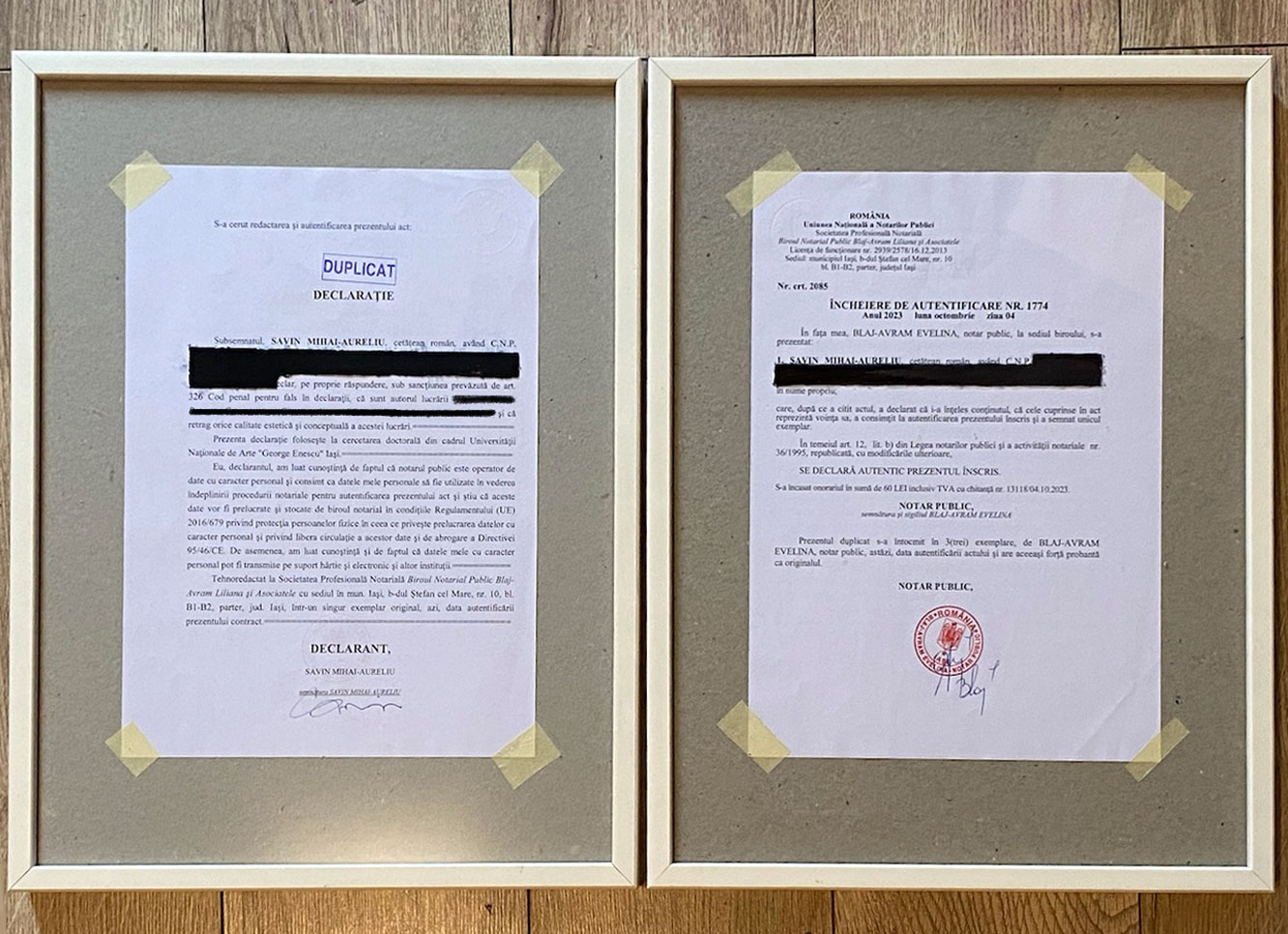
legalized documents
Drawing from superfictive art principles, as defined by Antoinette LaFarge, the project used textual and visual clues to subtly reveal its true intent. The statement employed professional jargon, such as “recontextualizing reality” and “arbitrary non-essential objects,” to mask the actual act of delegating the disposal of over one cubic meter of non-recyclable waste to a secondary agent—while being compensated for it. This intention was further unveiled in two subsequent artistic acts.
3D renders of the project